
14SOM-1RK020- God Bless America: Kristendomens utveckling i USA från George Washington till Barack Obama-Distans-7,5hp-50%
Kategori: KV Kulturvetenskaper
14SOM-1RK020- God Bless America: Kristendomens utveckling i USA från George Washington till Barack Obama-Distans-7,5hp-50%
1RK020- God Bless America: Kristendomens utveckling i USA från George Washington till Barack Obama-Distans-7,5hp-50%
1RK020- God Bless America: Kristendomens utveckling i USA från George Washington till Barack Obama-Distans-7,5hp-50%
Schooling and social change – comparative pedagogical and sociological perspectives, 7.5 Credits, is a master-level course to be delivered during summer 2018 as part of Linnaeus University Summer Academy. The course is designed to help students understand the complexities of schooling from educational and sociologies perspectives; to critically examine assumptions upon which curriculum and didaktik education traditions are built upon; to analyze and compare the relationship between schooling and society from sociological (such as critical, reproduction, and neo-institutional) theories; and to apply educational and sociological perspectives on education in developing and implementing education policies in modern education systems. We know that developing, reforming and managing education systems is a recurring task for every government and society everywhere in the world, not the least due to international large-scale assessments like PISA etc. The course examines the relationship between education and society from comparative educational and sociological perspectives, and explores the ways through which we ended up with education systems and schools we currently have. More specifically, the course dissects and challenges the assumptions that various educational (such as curriculum and didaktik) and sociological (such as critical, reproduction, and neo-institutional) theories are built upon and how they shaped and continue to shape schooling in 21st century. Relying on recent literature and professors from Sweden and a visiting professor from the US, the goal of the course is to enable students develop understanding about why we have the schools we have and critical insights to shape the future of education locally and globally.
Schooling and social change – comparative pedagogical and sociological perspectives, 7.5 Credits, is a master-level course to be delivered during summer 2018 as part of Linnaeus University Summer Academy. The course is designed to help students understand the complexities of schooling from educational and sociologies perspectives; to critically examine assumptions upon which curriculum and didaktik education traditions are built upon; to analyze and compare the relationship between schooling and society from sociological (such as critical, reproduction, and neo-institutional) theories; and to apply educational and sociological perspectives on education in developing and implementing education policies in modern education systems. We know that developing, reforming and managing education systems is a recurring task for every government and society everywhere in the world, not the least due to international large-scale assessments like PISA etc. The course examines the relationship between education and society from comparative educational and sociological perspectives, and explores the ways through which we ended up with education systems and schools we currently have. More specifically, the course dissects and challenges the assumptions that various educational (such as curriculum and didaktik) and sociological (such as critical, reproduction, and neo-institutional) theories are built upon and how they shaped and continue to shape schooling in 21st century. Relying on recent literature and professors from Sweden and a visiting professor from the US, the goal of the course is to enable students develop understanding about why we have the schools we have and critical insights to shape the future of education locally and globally.
Välkommen till 1IDÄ04
Ämneslärarprogrammet med inriktning mot arbete i gymnasiet, ingång Idrott och hälsa
Idrott och hälsa II - inriktning mot arbete i gymnasiet, campus Kalmar
I detta klassrum kommer all information om kursen 1IDÄ04 att finnas. Klassrummet är öppet för studenter som läser ämnet idrott och hälsa som första eller andra ämne på Ämneslärarprogrammet.
I detta klassrum hittar du också tidigare kurs, 1IDÄ02.
Kursansvariga/kontaktpersoner:
martin.wahlstrand@lnu.se
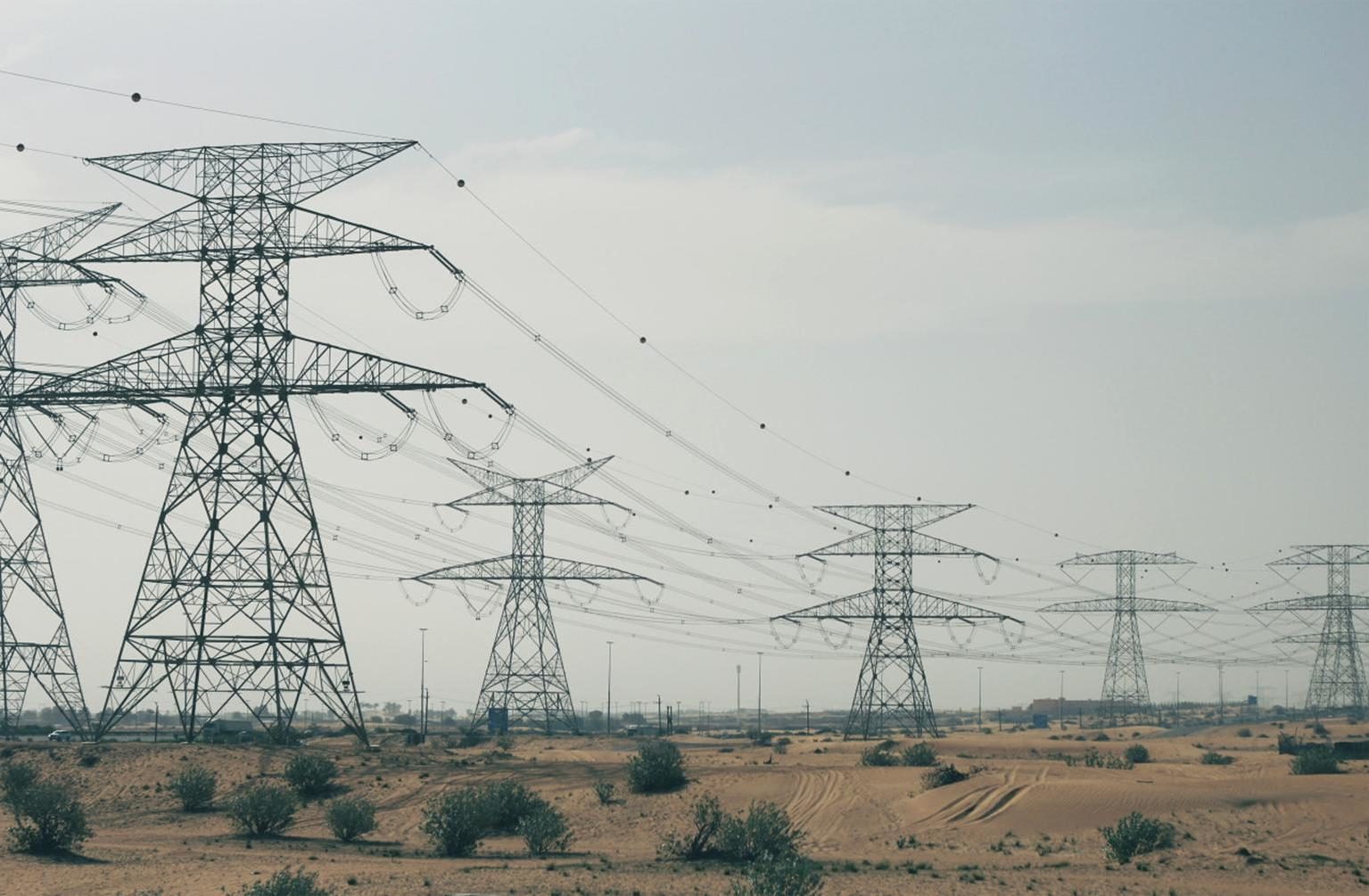
Today and the next forty years, the biggest change we have seen since electrical energy began to be distributed and widely used in the late 19th century will happen.
We no longer reflect on getting electrical energy out of the socket at home. Even less do we think about how it gets there. In this course, we take you from the world of the sun, wind, water and atoms to the electrical outlet. Electricity distribution has historically been one-way from a few hundred places out to millions of users.
Today, with renewable electricity production, we are turning that way around and getting hundreds of thousands of sources that will send their energy to all users.
This change does not happen by itself but is and will be dependent on people like you! With the course Electrical Power Systems you get insight into current and future infrastructure and can actively participate in building it for youself and your children.
The course deals with the structure of the system for distribution of electricity and the use of electricity for energy supply.
+change!
This semester is dedicated to the design approach meta-design, where the designer aims to be an active part in change-processes using designerly means. The semester is planned as a whole, where the different parts build on each other towards you carrying out a change-project as well as discussing, critically evaluating and contextualizing the design process from the perspective of sustainability.
To apply and practice the learning focuses of this course, you will work on one design project for the entire semester. The theme for this project will be Surplus of Homes.
This course on advanced beam theory comprises loading of beams in axial and transversal directions, bending and torsion. Beam theories for bending according to Bernoulli-Euler and Timoshenko are covered as well as theories for torsion according to St Venant and Vlasov. The course also covers the basics of theory for analysis of instability in a beam. Stress states in for example thin walled beams with open cross sections, and in beams with cross sections that vary in axial direction are calculated and discussed.
Welcome to the course 4SA720, Social Work in Times of migration: Perspectives on Policies, Institutions and Practices, 15 credits, Spring 2019
On this course website you can find information and news about the course.
In the folder " Course Documents" you will find basic information on the course, such as the course syllabus, the study guide and the schedule.
Under Topic 1 you find information about Module 1: Perspectives on migration and citizenship in pluralistic societies, 7,5 credit. Here material from lectures in Module 1 will be published. Moreover, here you will find instructions regarding the assignments related to Module 1. Here you also find the forum activity "Submission Individual written assignment " wherein you later on are supposed to submit your theoretical essay/paper.
Under Section 2 you will later during the course find information about Module 2: Social work practices and institutions in the context of migration, 7,5 credit. Here material from lectures in Module 2 will be published and you will find instructions regarding the assignments related to Module 2. Here you also find the forum activity "Submission Individual written assignment " wherein you later on are supposed to submit your final paper with an analysis of material collected during a minor "field study".
Here on the course website you can also discuss and raise questions regarding the course content, in the "Questions about the course" and "Class discussion" forum activities. The "News forum" will be used by teachers and examiners to publish news and updates on course activities.
We look forward to meeting you at course start!
Best regards
Jesper Johansson, course coordinator
Barzoo Eliassi, examiner
Welcome to the course Applied Machine Learning (Tillämpad Maskininlärning) 4DV117.
This is mainly an online course where you watch pre-recorded lectures and deepen your knowledge by reading the course literature. The course includes three physical meetings: course introduction, workshop 1 and workshop 2. At the workshops we discuss the subject and work with practical problems, so you need to bring your laptop to them. You can find the schedule here: https://coursepress.lnu.se/kurs/applied-machine-learning/schedule/
Welcome to the course 4SA720, Social Work in Times of migration: Perspectives on Policies, Institutions and Practices, 15 credits, Spring 2019
On this course website you can find information and news about the course.
In the folder " Course Documents" you will find basic information on the course, such as the course syllabus, the study guide and the schedule.
Under Topic 1 you find information about Module 1: Perspectives on migration and citizenship in pluralistic societies, 7,5 credit. Here material from lectures in Module 1 will be published. Moreover, here you will find instructions regarding the assignments related to Module 1. Here you also find the forum activity "Submission Individual written assignment " wherein you later on are supposed to submit your theoretical essay/paper.
Under Section 2 you will later during the course find information about Module 2: Social work practices and institutions in the context of migration, 7,5 credit. Here material from lectures in Module 2 will be published and you will find instructions regarding the assignments related to Module 2. Here you also find the forum activity "Submission Individual written assignment " wherein you later on are supposed to submit your final paper with an analysis of material collected during a minor "field study".
Here on the course website you can also discuss and raise questions regarding the course content, in the "Questions about the course" and "Class discussion" forum activities. The "News forum" will be used by teachers and examiners to publish news and updates on course activities.
We look forward to meeting you at course start!
Best regards
Jesper Johansson, course coordinator
Barzoo Eliassi, examiner
Welcome to the course Collecting, analyzing, and moderating user-generated social media material!
Course introduction is May 3rd from 9.00-11.00.
On the course, you get different types of learning. The lectures give an overview of an area. You use them together with the prescribed course literature to answer specific questions in a self-correcting test (which does not give points). The lectures address overviews of course literature and essential conditions in openness, freedom of expression, journalistic ethical principles, and ethical research considerations.
You are assessed in three mandatory examinations:
1) In the group project work, assessed in an oral examination, you work with at least one person in collaboration for a journalistic production using different methods to collect, analyze, and moderate user-generated material from social media. Resources such as supervision and seminars are provided. The oral examination of the group project work will be made on May 24th at 9-12 according to the upcoming schedule.
2) At this oral examination, you also do an "opposition" of another group work.
3) The course ends with individual work, where you choose an exciting example of journalistic use of user-generated material that you want to delve into. The in-depth study takes place by doing some form of test of the method, tool, production, moderation, etc. The deadline for the written report describing your work is June 4th.
Pernilla Severson, course coordinator, Associate Professor in Media and Communication Studies, pernilla.severson@lnu.se, +46480497058 http://lnu.se/en/staff/pernilla.severson/
+change!
This semester is dedicated to the design approach meta-design, where the designer aims to be an active part in change-processes using designerly means. The semester is planned as a whole, where the different parts build on each other towards you carrying out a change-project as well as discussing, critically evaluating and contextualizing the design process from the perspective of sustainability.
To apply and practice the learning focuses of this course, you will work on one design project for the entire semester. The theme for this project will be Surplus of Homes.
Welcome to the homepage of 2DV600 for the year 2021. The main topics covered in the course include a quick introduction to object-oriented programming in Java, software testing, data structures, algorithms, time complexity, regular expressions, and context-free grammars.
Course Language: English
Course Start: Monday, August 30, 2021

This course gives you a transdiciplinary view of happiness and health, ( philosophy, positive psychology,
biochemistry, immunology, sociology, economy, political science) It is online, each week has its theme.
Start with reading the syllabus and study guide , then buy the book, and start reading and watchen the lectures for the first week,
want some inspiration click on the links below:.
https://youtu.be/ZbZSe6N_BXs?t=118
https://youtu.be/L3HQMbQAWRc?t=21
This course on advanced beam theory comprises
loading of beams in axial and transversal directions, bending and torsion. Beam
theories for bending according to Bernoulli-Euler
and Timoshenko are covered as well as theories for torsion according to St
Venant and Vlasov. The course also covers the basics of theory for analysis of
instability in a beam. Stress states in for example thin walled beams with open
cross sections, and in beams with cross sections that vary in axial direction
are calculated and discussed.
This course is created because of a need for updating the thinking and applying of methods in humanities and social science. The need consists of on the one hand to understand and make use of digital media in various scientific studies. On the other hand the need is to understand and make use of relevant methods including digital methods when studying digital media. At the same time, there is a need for discernment in relation to the wealth of information that lay readily before us on various platforms throughout the digital world: how can we as scholars use this information for our own projects in the best way? How do we use it in an ethically sound way?
Therefore, this is a course for students interested in advancing knowledge on the importance of understanding digital media in general as a framework, to include ethical aspects and also the ability to apply concrete sampling and analysis methods for digital media.
The course covers how digital media change culture and social relations and how this affects scientific sampling and analysis methods. The course further develops ethical approaches for the collection of research materials. Through various theoretical starting points research data is analysed. During the course you will try various digital techniques to analyse and visualise data.
This is an online course for 7.5 credits and it is adapted to an advanced level. Therefore, we as lecturers build on and deepen the knowledge, skills and abilities that you as students have gained at the graduate level in a humanistic or social science discipline. The pace for the course is a so called quarter speed. This means that you will devote about a day a week for the course. We as teachers will guide your effort during the course by giving assignments continuously throughout the course.
Teaching and learning will take place through a MyMoodle course web site. You are expected to visit the course web site every week. The course is structured as themes, or course modules. This first course module is “Introducing digital media, theory and method”. Second module is “Understanding contexts and approaches”. Third module is “Sampling methods”. Fourth module is “Analysis methods”. Fifth and concluding module is “Exam”.
For every course module you are expected to watch video lectures with attached assignments, to take part of assigned resources, read about news from teachers and students and to contribute to moderated discussions in Forum, seminar. Communication with us teachers takes place through the course web site in assigned communication forum Questions for teacher. When individual communication is needed, you can email us.
Welcome to the course in Field work and data analysis!
This course is mostly project based.
The goals with the course are to learn
-to plan a project/sampling that includes determination of chemical and physical variables in environmental media (e.g. soil, sediment, rock, water or vegetation) that has been collected in the field.
-perform sampling of one or more of such environmental media.
-prepare and analyze environmental media in the laboratory
-statistical handling and interpretation of the analytical data.
The specific project of this course is sampling and analysis of sediments in the harbour of Kalmar.

Welcome
to Introduction to Health Informatics
You have applied for and been admitted to the course/program code, program/course name (number of credits) at the Faculty of xxx at Linnaeus University. With this letter, we would like to warmly welcome you and give you some brief information before the beginning of the semester.
Introductory meeting If you need help finding a map, there is a map at lnu.se: https://lnu.se/mot-linneuniversitetet/kontakta-och-besoka/karta/
Get a student account and register: You need a student account to be able to write. At www.lnu.se/nystudent, there is information on how to do it. Registration is required for you to be able to commence the education you have been admitted to.
Course literature: The course literature list can be found in the course / and syllabus available here: https://lnu.se/student/under-studierna/kurs-och-utbildningsplaner/ Enter course code or course name in the search field to get the current syllabus. If there are multiple versions, select the latest version.
Mandatory literature:
Sheikh, A., Bates, D., Wright, A. & Cresswell, K. eds (2017). Key Advances in Clinical Informatics Transforming Health Care through Health Information Technology, Academic Press, ISBN: 9780128095232, 334 p.
Are you prevented from participating in the introductory session contact: MD Shafiqur Rahman Jabin mdshafiqur.rahmanjabin@lnu.se
More information: If you have any questions, please contact the program/course manager via e-mail or telephone: MD Shafiqur Rahman Jabin, mdshafiqur.rahmanjabin@lnu.se, 0764478587
Linnaeus University switchboard: 0772-28 80 00
With kind regards
MD Shafiqur Rahman Jabin
Welcome to the course in Feasibility Studies. This is a course where you carry out a project related to a renewable energy project and present the work in a report and a presentation. The projects are carried out in groups of 3 to 6 persons.
The material from the course <<Functional Analysis>> will be actively used in this course, especially:
Lecture 6, Elements of Topology, HT N 3 (theoretical)
https://www.youtube.com/watch?v=mMcEPTKpFtM
Lecture 9a, Topological linear spaces, seminorms.
https://www.youtube.com/watch?v=2WqVvimZDmk
Lecture 9b, Topological linear spaces, seminorms,
continuous linear operators.
https://www.youtube.com/watch?v=1ZjvXAH5mqs
Functional Analysis, Lecture 11, Linear functionals, Hahn-Banach theorem.
https://www.youtube.com/watch?v=j4hk1ssC33k
Functional Analysis, Lecture 12, Bounded=continous linear functionals on normed spaces, conjugate (dual) space, second dual.
https://www.youtube.com/watch?v=rm26JBv-8ME

Welcome to a series of workshops as part of your individual work on the master’s thesis. The workshops will be held by Eleonora Poggio and myself, Birgit Tremml-Werner. They are designed in a way that provides you support and essential information for the formal thesis writing and the examination process. Focusing on specific themes and tasks, the workshop will get you started with the nitty gritty of research and support you in the working process. We suggest the following schedule:
Friday, 9 April 2021 Purpose and goal of writing a master’s thesis at LNU (45 or 60 ECTS), search for a supervisor, thesis regulations, writing hints and presentation skills
Friday, 23 April 2021
Friday, 7 May 2021
Friday, 21 May 2021
Final assignment: A working introduction (following Umberto Eco) written in academic style with sections on the choice of topic, relevance, methodology and research question and discussion of the state of the art. Approx. 3,000 words.
Course participants is compulsory and counts 4 ECTS of the total of the master’s thesis of 45 or 60 ECTS respectively. Participants will be asked to deliver short oral and/or written assignments.
Get the knowledge to understand electricity production and distribution!
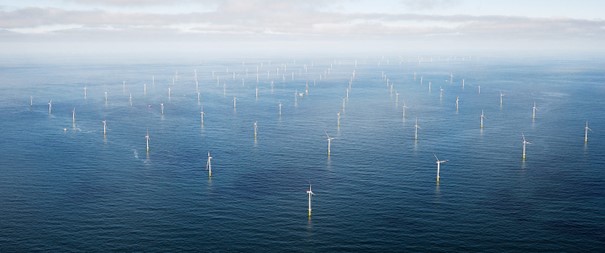
Today and the next ten years the biggest change we have seen since electrical energy began to be distributed and used widely in the late 19th century. We no longer reflect on getting electrical energy out of the socket at home. Even less do we think about how it gets there. In this course, we take you from the world of the sun, wind, water and atoms to the electrical outlet. Electricity distribution has historically been unidirectional from a few hundred locations to millions of users. Today, with renewable electricity production, we reverse that way and get hundreds of thousands of sources that will send their energy to all users. This transition does not happen by itself, but is and will be dependent on people like you! With the Power System course, you gain an insight into the infrastructure of today and the future and can actively participate in building it for you and your children.
The course deals with the construction of the system for distribution of electric power and the use of electric power for energy supply.
+change!
This semester is dedicated to the design approach meta-design, where the designer aims to be an active part in change-processes using designerly means. The semester is planned as a whole, where the different parts build on each other towards you carrying out a change-project as well as discussing, critically evaluating and contextualizing the design process from the perspective of sustainability.
To apply and practice the learning focuses of this course, you will work on one design project for the entire semester. The theme for this project will be Surplus of Homes.
Dear Students,
Welcome to the course " Life Cycle Analysis"– 4BT 312 (7.5 hp)
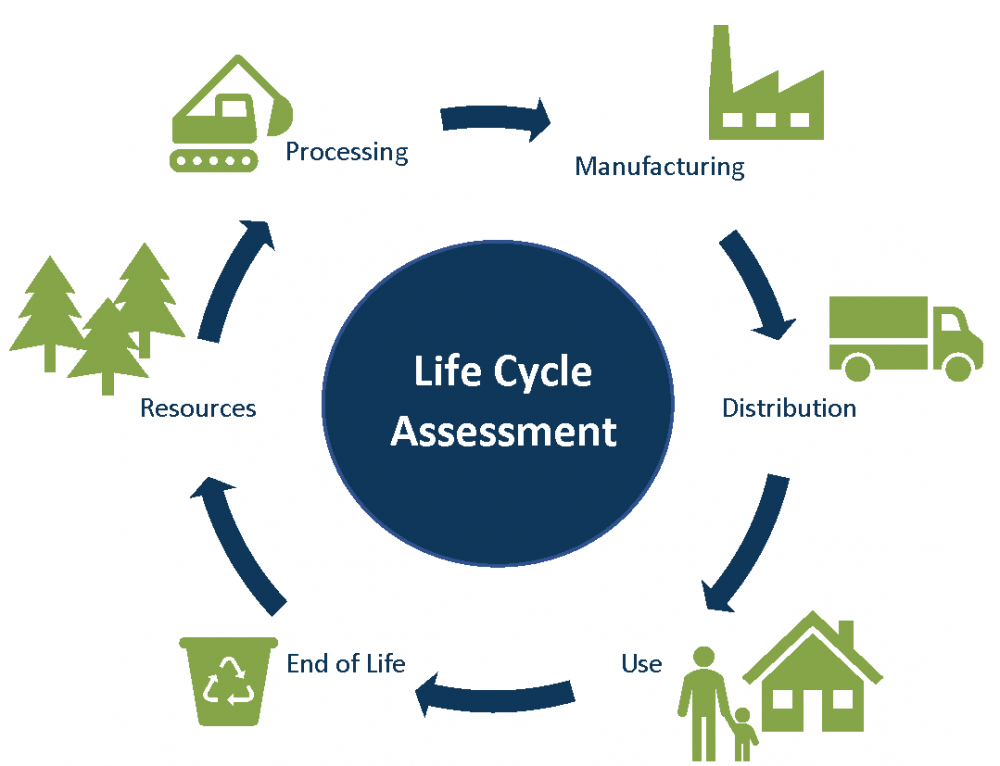
The science of life cycle analysis (LCA) is in continuous development. Ample research has been done to improve environmental indicators and understand systems' complexity while performing LCA, attributional and consequential LCA. Understanding LCA results is important to make them more useful for decision-making and communication. Development of any product, service, or infrastructure causes environmental impact over their value chain viz; from resource extraction during its use/consumption to waste management. This course is aimed at (i) increasing the understanding of the environmental impacts of a product/service throughout the value chain, (ii) the importance of life cycle thinking in business as well as in the public sector and authorities, and (iii) deepening the knowledge of life cycle analysis. The course comprises lectures, seminars, project work, and a written exam.
Consequential and Attributional Aspects in LCAs; LCA standards; LCA on Forestry & Biofuel; Buildings; Energy System, evaluation of a product supply chain: life cycle assessment perspective on food, fuel, and fuel systems Integrating LCA with LCC for decision-support are some of the highlights within the course.
Dr. Brijesh Mainali (Associate Professor) will be this course's coordinator. Besides, Dr. Georgios Pardalis (Postdoc researcher) and Ph.D. researchers Ms. Roma Almeida and Ms. Migena Sula will be guiding students with the project work. This course will have a couple of invited lectures from national and international experts in LCA, both from Academia and from Industry. We believe you will gain academic and some hands-on knowledge from industry partners on Life Cycle Analysis through this course.
The course will run in hybrid mode, which means lectures will be given on campus and via Zoom. No recording will be available. The lecture notes and presentation will be uploaded to My-Moodle after each class. Any updates and changes will be notified via MY-Moodle. The link for the course schedule (Time Edit database) is provided below. The course plan has been uploaded in My Moodle.
The course provides a central knowledge of advanced electrodynamics.
Focus is on the use of advanced mathematical physics tools to solve
complex electrodynamics problems relevant for several fields in physics.
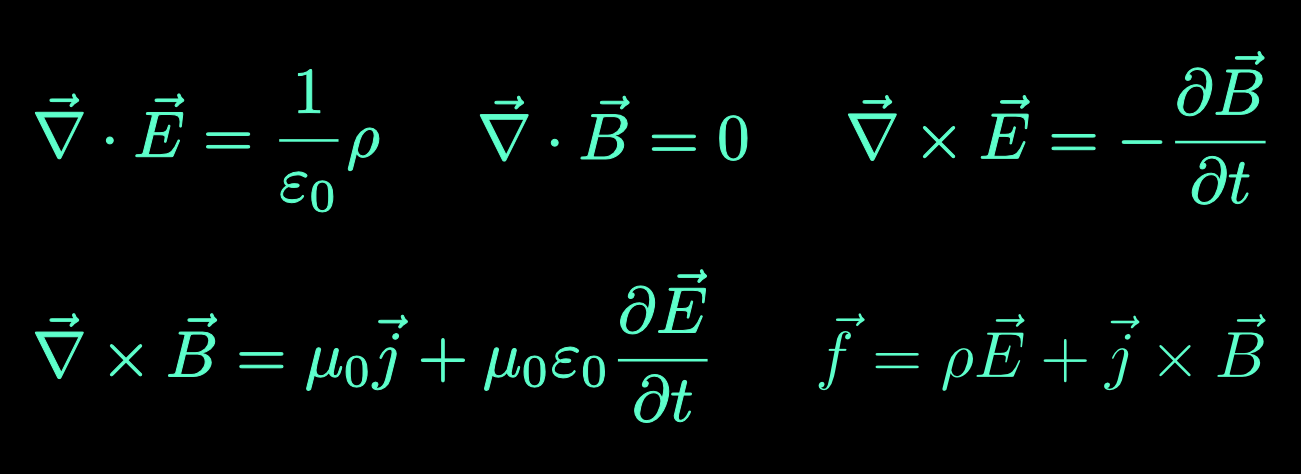
Content: Maxwell’s equations, conservation laws and electromagnetic
potentials. Wave propagation in media. Simple radiating systems of
moving charges. Selected advanced topics, such as relativistic
formulation, radiation by moving charges, radiation damping, quantum
optics.

This course deals with imperial dominance and resistance and their role
in the making of the modern world. You will be introduced to causes and
consequences of modern imperialism and colonialism from the 15th century
until the present, with particular attention to the period from the
mid-18th century until the end of the first World War. The course has a
special focus on theories of imperialism and questions of inequality,
violence, borderlands, gender, race and cilivisation.

Welcome
to Introduction to Health Informatics
You have applied for and been admitted to the course/program code, program/course name (number of credits) at the Faculty of xxx at Linnaeus University. With this letter, we would like to warmly welcome you and give you some brief information before the beginning of the semester.
Introductory meeting If you need help finding a map, there is a map at lnu.se: https://lnu.se/mot-linneuniversitetet/kontakta-och-besoka/karta/
Get a student account and register: You need a student account to be able to write. At www.lnu.se/nystudent, there is information on how to do it. Registration is required for you to be able to commence the education you have been admitted to.
Course literature: The course literature list can be found in the course / and syllabus available here: https://lnu.se/student/under-studierna/kurs-och-utbildningsplaner/ Enter course code or course name in the search field to get the current syllabus. If there are multiple versions, select the latest version.
Mandatory literature:
Sheikh, A., Bates, D., Wright, A. & Cresswell, K. eds (2017). Key Advances in Clinical Informatics Transforming Health Care through Health Information Technology, Academic Press, ISBN: 9780128095232, 334 p.
Are you prevented from participating in the introductory session contact: MD Shafiqur Rahman Jabin mdshafiqur.rahmanjabin@lnu.se
More information: If you have any questions, please contact the program/course manager via e-mail or telephone: MD Shafiqur Rahman Jabin, mdshafiqur.rahmanjabin@lnu.se, 0764478587
Linnaeus University switchboard: 0772-28 80 00
With kind regards
MD Shafiqur Rahman Jabin
Module 1
#Sustainability and Exploratory Methods
4DI171, Design Process and the Complexity of Sustainability
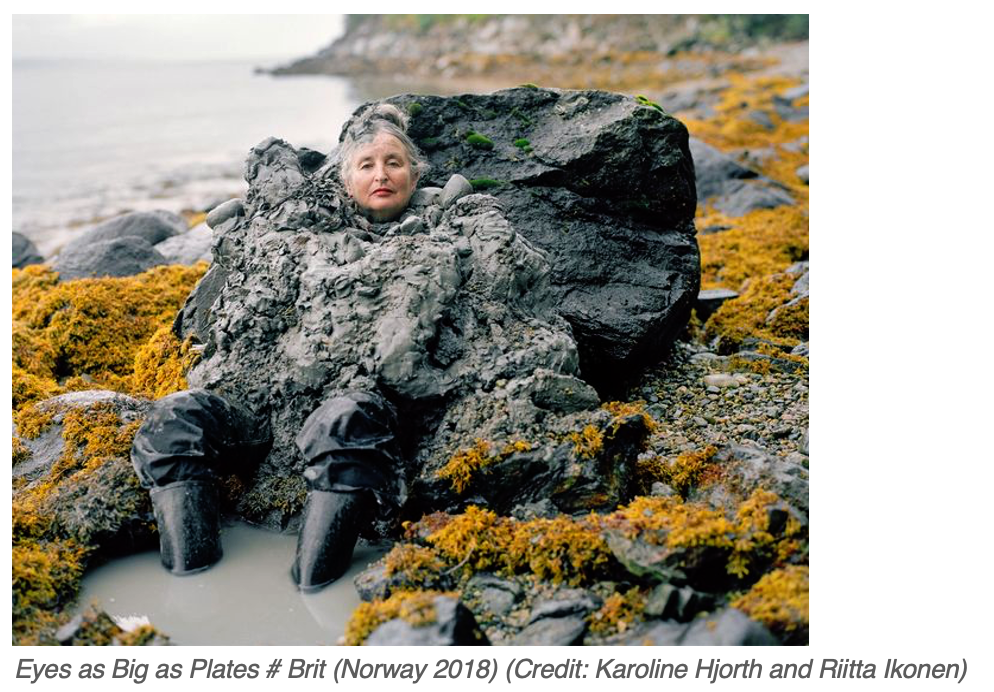
Welcome to LNU - Design+Change Programme - 1st year MFA (Masters of Fine Arts)! This is the 1st course of your study and we aim to make this course a practical one, delivered in the form of laboratory sessions and exploratory artistic workshops. Sessions will incorporate a wide range of materials, focusing on their sustainability with a broader exploration of sustainability from an ecological and economic perspective.We choose the word “immerse (v.)"[1] as the ‘theme’ for the course. First, you are asked to explore how to articulate your design/art education and practice experience (BEING). From there, immerse yourself into an object and through its perspective “feel’ your new environment (BELONGING). Then, transform yourself into a new “species” to share your expectation for new ecosystem(s)(BECOMING). Throughout the journey you will be supported by lectures, workshop introductions, tutorials and group discussions, supporting you to immerse yourself in this 3D and body-storming experiment. You are encouraged to explore new ways to reflect upon your experiment especially compared to your previous experience in design-related study.
[1] https://www.etymonline.com/word/immerse#:~:text=immerse%20(v.),%2C%20etc.%2C%20from%201660s. " to plunge into (a fluid)," early 15c. (implied in immersed), from Latin immersus, past participle of immergere "to plunge in, dip into, sink, submerge". Figuratively, of study, work, passion, etc., from 1660s. Related: Immersed; immersing; immersive.
During this course we will unravel the global history from a graphic design point of view. We start out with the earliest found forms of visual expression and will move chronologically and thematically through the ages until we reach present times.Watch the introduction clip below to get started! |
During this course we will unravel the global history from a graphic design point of view. We start out with the earliest found forms of visual expression and will move chronologically and thematically through the ages until we reach present times.Watch the introduction clip below to get started! |
Course home page, mymoodle is NOT used
https://coursepress.lnu.se/kurser/mjukvarutestning/
Course communication happens in Slack
https://coursepress.slack.com/archives/C063EN1G4DC
+change!
This semester is dedicated to the design approach meta-design, where the designer aims to be an active part in change-processes using designerly means. The semester is planned as a whole, where the different parts build on each other towards you carrying out a change-project as well as discussing, critically evaluating and contextualizing the design process from the perspective of sustainability.
To apply and practice the learning focuses of this course, you will work on one design project for the entire semester. The theme for this project will be Surplus of Homes.
This course deals with imperial dominance and resistance and their role
in the making of the modern world. You will be introduced to causes and
consequences of modern imperialism and colonialism from the 15th century
until the present, with particular attention to the period from the
mid-18th century until the end of the first World War. The course has a
special focus on theories of imperialism and questions of inequality,
violence, borderlands, gender, race and cilivisation.

Om du inte kommer in i kursrummet, behöver du registrera dig på kursen!
Registrering
Registreringen är öppen på https://lnu.se/student/ny-student/ under perioden 29 maj–11 juni. Om du inte registrerar dig under denna period förlorar du din plats på kursen.
I vissa fall kan det gå att bli
registrerad senare än så,
kontakta oss så undersöker vi om vi kan hjälpa dig. Kom ihåg att
uppge vilken kurs det gäller och ditt personnummer.
E-post: fkh@lnu.se

This course gives you a transdiciplinary view of happiness and health, ( philosophy, positive psychology,
biochemistry, immunology, sociology, economy, political science) It is online, each week has its theme.
Start with reading the syllabus and study guide , then buy the book, and start reading and watchen the lectures for the first week,
want some inspiration click on the links below:.
https://youtu.be/ZbZSe6N_BXs?t=118
https://youtu.be/L3HQMbQAWRc?t=21
The course offers a critical overview of slavery and slave trade on a global level, surveying the research trends of the last decades. Historical as well as literary perspectives are applied. While slavery has been a fact of life as long as human records exist, an analytic and comparative approach to the phenomenon is relatively late. A great deal of attention has been devoted to the Trans-Atlantic trafficking in humans, and slave labour in the Americas. More recently, slave-based economies in the Mediterranean and the Indian Ocean World have come into the limelight. Hitherto neglected groups with a slave-like status, in places like India, China, and Korea, are now being explored. Moreover, the plight of humans in the contemporary world with a bonded and permanently subservient status has called for attention. The course aims to address the “curse of the particular” which has long haunted research on slavery and failed to address connectivities and comparisons between different regions. It also wishes to challenge the Atlantic paradigm that has tended to see slavery from a matrix of European-led employment of slave labour. Attention is put on the great methodological strides in recent decades, where new and innovative uses of the source material has yielded a wealth of information about slavery as a condition and a process, not least illuminating its gendered aspects. During the course the great structural variety of enslavement and degrees of unfree status over the world will be discussed. Economic-historical theories about the rationale of slavery, from early scholars such as Marx and Nieboer to modern ones such as James Warren and Peter Boomgaard, are surveyed. Moreover, the memories and narratives of slavery in literary texts are analyzed.
Course home page, mymoodle is NOT used
https://coursepress.lnu.se/kurser/mjukvarutestning/
Course communication happens in Slack
https://coursepress.slack.com/archives/C07UNH3V6C8
+change!
This semester is dedicated to the design approach meta-design, where the designer aims to be an active part in change-processes using designerly means. The semester is planned as a whole, where the different parts build on each other towards you carrying out a change-project as well as discussing, critically evaluating and contextualizing the design process from the perspective of sustainability.
This course deals with imperial dominance and resistance and their role
in the making of the modern world. You will be introduced to causes and
consequences of modern imperialism and colonialism from the 15th century
until the present, with particular attention to the period from the
mid-18th century until the end of the first World War. The course has a
special focus on theories of imperialism and questions of inequality,
violence, borderlands, gender, race and cilivisation.
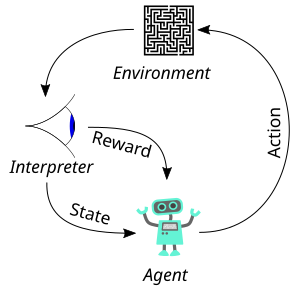
Reinforcement learning (RL) is an interdisciplinary area of stochastic optimization, machine learning and optimal control. The underlying problem concerns how an intelligent agent ought to take actions in a dynamic environment in order to maximize the cumulative reward. In this course you will learn more about this problem, the corresponding mathematical framework and methods of RL, as well as its applications. Implementation in the form of computer programming is also an important element of the course.
"Philosophy of science and research methods in Media and Communication Studies" is a course that explores philosophy of science in the broader context of social science and arts and humanities, but with a special focus on research traditions and epistemology in the field of media and communication studies. The course consists of three modules:
1. Philosophy of Science (5 credits). In the first module, we critically explore how knowledge is perceived, constructed, produced and valued within both arts and humanities and in social science. A key goal is for you to develop an informed and independent stance of your own in regards to different ways of viewing the limits and benefits of academic research in different disciplines in general, and in media and communication studies in particular. The examination for this module is an “Over-the-day-essay” on the 20 September. (Instructions will be posted on Moodle).
2. Research methods in Media and Communication (5 credits) In the second module, the focus is on engaging with a variety of methodological approaches within the field of media and communication studies. This will be done by diving into selected examples of methodological approaches. The examination for this module will be a Viva (Oral Exam) on the 18 October. Instructions will be posted on Moodle.
3. Research Plan (5 credits). In the final module you will work independently, under supervision, with creating a research plan for a research project addressing research questions of relevance for the field of media and communication studies. The examination for this module will be a written assignment - a complete research plan (deadline 31 Octoner) , and participation in the opposition Seminar (5 November).
Welcome to the course in Field work and data analysis!
This course is mostly project based.
The goals with the course are to learn
-to plan a project/sampling that includes determination of chemical and physical variables in environmental media (e.g. soil, sediment, rock, water or vegetation) that has been collected in the field.
-perform sampling of one or more of such environmental media.
-prepare and analyze environmental media in the laboratory
-statistical handling and interpretation of the analytical data.
The specific project of this course is sampling and analysis of sediments in the harbour of Kalmar.

Registrering
Om du inte kommer in i kursrummet, behöver du registrera dig på kursen!
Registreringen är öppen på https://lnu.se/student/ny-student/ under perioden 27 maj–5 juni. Om du inte registrerar dig under denna period förlorar du din plats på kursen.
I vissa fall kan det gå att bli
registrerad senare än så,
kontakta oss så undersöker vi om vi kan hjälpa dig. Kom ihåg att
uppge vilken kurs det gäller och ditt personnummer.
E-post: fkh@lnu.se

Välkommen till den första kursen inom blocket idrottens träningslära. Kursen riktar sig till idrottare, motionärer, idrottslärare, tränare etc. som vill fördjupa och uppdatera kunskaper om hur man kan optimera styrketräningen inom olika idrotter.
Kontakt
Thony Ragnarsson, Kursansvarig
thony.ragnarsson@lnu.se

This course gives you a transdiciplinary view of happiness and health, ( philosophy, positive psychology,
biochemistry, immunology, sociology, economy, political science) It is online, each week has its theme.
Start with reading the syllabus and study guide , then buy the book, and start reading and watchen the lectures for the first week,
want some inspiration click on the links below:.
https://youtu.be/ZbZSe6N_BXs?t=118
https://youtu.be/L3HQMbQAWRc?t=21
The course offers a critical overview of slavery and slave trade on a global level, surveying the research trends of the last decades. Historical as well as literary perspectives are applied. While slavery has been a fact of life as long as human records exist, an analytic and comparative approach to the phenomenon is relatively late. A great deal of attention has been devoted to the Trans-Atlantic trafficking in humans, and slave labour in the Americas. More recently, slave-based economies in the Mediterranean and the Indian Ocean World have come into the limelight. Hitherto neglected groups with a slave-like status, in places like India, China, and Korea, are now being explored. Moreover, the plight of humans in the contemporary world with a bonded and permanently subservient status has called for attention. The course aims to address the “curse of the particular” which has long haunted research on slavery and failed to address connectivities and comparisons between different regions. It also wishes to challenge the Atlantic paradigm that has tended to see slavery from a matrix of European-led employment of slave labour. Attention is put on the great methodological strides in recent decades, where new and innovative uses of the source material has yielded a wealth of information about slavery as a condition and a process, not least illuminating its gendered aspects. During the course the great structural variety of enslavement and degrees of unfree status over the world will be discussed. Economic-historical theories about the rationale of slavery, from early scholars such as Marx and Nieboer to modern ones such as James Warren and Peter Boomgaard, are surveyed. Moreover, the memories and narratives of slavery in literary texts are analyzed.
Hej!
Jag heter Boel Holmstedt och jag är er lärare i kursen Installationsteknik och Energihushållning. Föreläsningarna kommer att ske i "storgrupp". Jag bryter av föreläsningar med lite inblandning av räkneuppgifter. Vi kommer att ha två tillfällen för uppföljande räkneövningar.
Kurslitteraturen är: Projektering av VVS-installationer av Catarina Warfvinge och Mats Dahlblom. Boken används som "uppslagsbok" för att kunna fördjupa sig/repetera det som nämns på föreläsningarna. Är ni med på samtliga föreläsningar så är det inte nödvändigt att köpa boken.
Allt föreläsningsmaterial kommer veckovis att läggas upp i de olika blocken.
Välkomna till kursstart
Course home page, mymoodle is NOT used
https://coursepress.lnu.se/kurser/mjukvarutestning/
Course communication happens in Slack
https://coursepress.slack.com/archives/C07UNH3V6C8

Welcome to a course that will give you knowledge, skills and 7,5 credits. The course is open for both exchange students and international students in Kalmar.
This is your startpage in MyMoodle where you can find course material, information and ways of communicating with your teachers and fellow students. Your teachers are Ulrika Brynielsson and Lina Karlsson. Roland Lindholm is the course coordinator.
Under the headline Administration in the My Moodle-page, go to the sub-title Users (Or - under the headline This course, go to the sub-title Participants.). There you can see the names of your fellow students in the course. If you have not done it yet, please register to the course as soon as possible to get full access of MyMoodle and to give teachers and members of staff a good view of who will attend the course or not.
There are two meetings every week, i e week 4-10, on Monday and Wednesday. Each meeting begins at 17.00 and ends at 19.30 (Swedish time). In week 9 there is an oral exam during class. In week 10 there is a written exam on Monday 10 of march.
After the written exam there is the Return of exam on Monday 17 of March (which is followed by an introduction to the continuation course 1SV802). And, finally, there is a possibility of Re-exam on Tuesday 25 of March.

Welcome to a course that will give you knowledge, skills and 7,5 credits. NB! The course is open for exchange students in Växjö.
This is your startpage in MyMoodle where you can find course material, information and ways of communicating with your teacher and fellow students. Roland Lindholm (group 1), Alla Bidniuk (group 2), Maria Nyman (group 3) and Halla Hallsteinsdottir (group 4) are your teachers. Roland Lindholm is the course coordinator.
Under the headline Administration in the My Moodle-page, go to the sub-title Users (Or - under the headline This course, go to the sub-title Participants.). There you can see what group you belong to. If you have not done it yet, please register to the course as soon as possible to get full access of MyMoodle and to give teachers and members of staff a good view of who will attend the course or not.
There are two meetings every week, i e week 4-10 . Each meeting begins at 17.00 and ends at 19.30 (Swedish time). Group 1 meet on Mondays and Tuesdays, group 2 on Mondays and Wednesdays and group 3-4 Tuesdays and Thursdays. In week 9 there is an oral exam during class. In week 10 there is a written exam on Monday 10 of March.
After the written exam there is the Return of exam on Monday 17 of March (which is followed by an introduction to the continuation course 1SV802). And, finally, there is a possibility of Re-exam on Monday 24 of March.
+change!
This semester is dedicated to the design approach meta-design, where the designer aims to be an active part in change-processes using designerly means. The semester is planned as a whole, where the different parts build on each other towards you carrying out a change-project as well as discussing, critically evaluating and contextualizing the design process from the perspective of sustainability.
A very warm welcome to the course Political Analysis!
The course convenor is Elvis Bisong Tambe. Diana Morina is also teaching on the course. The language of instruction is English. We kindly ask you to use English in all communication here on MyMoodle as a courtesy to any non-Swedish speaking students enrolled in the course.
In this MyMoodle room you will find information about the course, and this is also where you will submit your assignments. The site is updated as the course progresses. If you have any questions (after having read the available information), please use the Forum provided here on MyMoodle. That way we can ensure that all students are given the same information. If you have questions or concerns of a personal nature that require a degree of confidentiality, please contact the relevant teacher directly.
Looking forward to working with you this autumn!
Best wishes,
Elvis/Diana
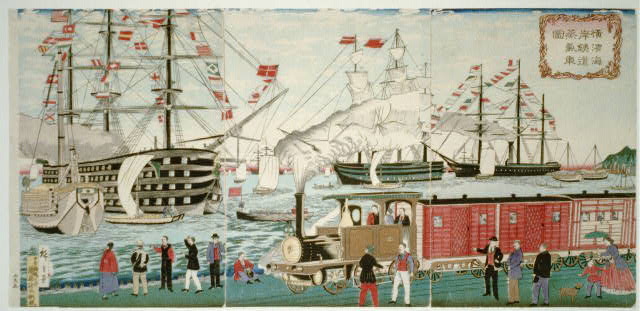
This course deals with imperial dominance and resistance and their role in the making of the modern world. You will be introduced to causes and consequences of modern imperialism and colonialism from the 15th century until the present, with particular attention to the period from the mid-18th century until the end of the first World War. The course has a special focus on theories of imperialism and questions of inequality, violence, borderlands, gender, race and cilivisation.
Important date: Tuesday 11 November, 10.15-12.00, Lecture, where I shall describe your tasks during this course as well as the ways and deadlines for their realization (see also information on this mymoodle webpage). I strongly recommend to come to this lecture
"Philosophy of science and research methods in Media and Communication Studies" is a course that explores philosophy of science in the broader context of social science and arts and humanities, but with a special focus on research traditions and epistemology in the field of media and communication studies. The course consists of three modules:
1. Philosophy of Science (5 credits). In the first module, we critically explore how knowledge is perceived, constructed, produced and valued within both arts and humanities and in social science. A key goal is for you to develop an informed and independent stance of your own in regards to different ways of viewing the limits and benefits of academic research in different disciplines in general, and in media and communication studies in particular. The examination for this module is an “Over-the-day-essay” on the 20 September. (Instructions will be posted on Moodle).
2. Research methods in Media and Communication (5 credits) In the second module, the focus is on engaging with a variety of methodological approaches within the field of media and communication studies. This will be done by diving into selected examples of methodological approaches. The examination for this module will be a Viva (Oral Exam) on the 18 October. Instructions will be posted on Moodle.
3. Research Plan (5 credits). In the final module you will work independently, under supervision, with creating a research plan for a research project addressing research questions of relevance for the field of media and communication studies. The examination for this module will be a written assignment - a complete research plan (deadline 31 Octoner) , and participation in the opposition Seminar (5 November).
Dear all,
I have made a preliminary contents plan for the course as seen below. This is by no means not cut in stone, I will be happy to consider suggestions from students. We will discuss details on Lecture 1, but you are also welcome to (and encouraged to!) drop me an email prior to that, to let me know about your expectations and fields of interest.
The contents of the course will primarily evolve around Chapters 11-15 of the Milton & Arnold book, with particular focus on the Multiple linear regression model, Factorial experiments and Analysis of variance. Matrix algebra will be used to a large extent throughout the course, and I plan to devote 1-2 lectures on important matrix concepts (matrix multiplication, spectral decomposition, matrix inverse, projections, trace etc) and distributional properties of linear and quadratic forms.
I urge all students to attend Lecture 1 so that we can discuss and decide on the format and contents of the course together.
Preliminary plan of lectures:
Lecture 1. Introduction to the course, Matrix algebra I
Lecture 2. Matrix algebra II, quadratic forms
Lecture 3. Correlation, causality, data generating mechanisms, OLS and ML
Lecture 4. The multiple linear regression model, I
Lecture 5. The multiple linear regression model, II
Lecture 6. The multiple linear regression model, III
Lecture 7. Analysis of variance
Lecture 8. Factorial experiments
Lecture 9. Categorical data
Lecture 10. The R-software
Lecture 11. Extra, if needed
Lecture 12. Examination (presentations, discussions, oral exam)

Welcome to a course that will give you knowledge, skills and 7,5 credits. The course is open for both exchange students and international students in Kalmar.
This is your startpage in MyMoodle where you can find course material, information and ways of communicating with your teachers and fellow students. Your teachers are Ulrika Brynielsson and Lina Karlsson. Roland Lindholm is the course coordinator.
Under the headline Administration in the My Moodle-page, go to the sub-title Users (Or - under the headline This course, go to the sub-title Participants.). There you can see the names of your fellow students in the course. If you have not done it yet, please register to the course as soon as possible to get full access of MyMoodle and to give teachers and members of staff a good view of who will attend the course or not.
There are two meetings every week, i e week 4-10, on Monday and Wednesday. Each meeting begins at 17.00 and ends at 19.30 (Swedish time). In week 9 there is an oral exam during class. In week 10 there is a written exam on Monday 10 of march.
After the written exam there is the Return of exam on Monday 17 of March (which is followed by an introduction to the continuation course 1SV802). And, finally, there is a possibility of Re-exam on Tuesday 25 of March.

Welcome to a course that will give you knowledge, skills and 7,5 credits. NB! The course is open for exchange students in Växjö.
This is your startpage in MyMoodle where you can find course material, information and ways of communicating with your teacher and fellow students. Roland Lindholm (group 1), Alla Bidniuk (group 2), Maria Nyman (group 3) and Halla Hallsteinsdottir (group 4) are your teachers. Roland Lindholm is the course coordinator.
Under the headline Administration in the My Moodle-page, go to the sub-title Users (Or - under the headline This course, go to the sub-title Participants.). There you can see what group you belong to. If you have not done it yet, please register to the course as soon as possible to get full access of MyMoodle and to give teachers and members of staff a good view of who will attend the course or not.
There are two meetings every week, i e week 4-10 . Each meeting begins at 17.00 and ends at 19.30 (Swedish time). Group 1 meet on Mondays and Tuesdays, group 2 on Mondays and Wednesdays and group 3-4 Tuesdays and Thursdays. In week 9 there is an oral exam during class. In week 10 there is a written exam on Monday 10 of March.
After the written exam there is the Return of exam on Monday 17 of March (which is followed by an introduction to the continuation course 1SV802). And, finally, there is a possibility of Re-exam on Monday 24 of March.
Welcome to the 2025 instance of the course. The page is currently under development; more information will be added soon.

This course gives you a transdiciplinary view of happiness and health, ( philosophy, positive psychology, biochemistry, immunology, sociology, economy, political science) It is online, each week has its theme.
Start with reading the syllabus and study guide , then buy the book, and start reading and watch the lectures for the first week,
want some inspiration click on the video links below:
The course offers a critical overview of slavery and slave trade on a global level, surveying the research trends of the last decades. Historical as well as literary perspectives are applied. While slavery has been a fact of life as long as human records exist, an analytic and comparative approach to the phenomenon is relatively late. A great deal of attention has been devoted to the Trans-Atlantic trafficking in humans, and slave labour in the Americas. More recently, slave-based economies in the Mediterranean and the Indian Ocean World have come into the limelight. Hitherto neglected groups with a slave-like status, in places like India, China, and Korea, are now being explored. Moreover, the plight of humans in the contemporary world with a bonded and permanently subservient status has called for attention. The course aims to address the “curse of the particular” which has long haunted research on slavery and failed to address connectivities and comparisons between different regions. It also wishes to challenge the Atlantic paradigm that has tended to see slavery from a matrix of European-led employment of slave labour. Attention is put on the great methodological strides in recent decades, where new and innovative uses of the source material has yielded a wealth of information about slavery as a condition and a process, not least illuminating its gendered aspects. During the course the great structural variety of enslavement and degrees of unfree status over the world will be discussed. Economic-historical theories about the rationale of slavery, from early scholars such as Marx and Nieboer to modern ones such as James Warren and Peter Boomgaard, are surveyed. Moreover, the memories and narratives of slavery in literary texts are analyzed.
Welcome to a course that will give you knowledge, skills and 7,5 credits. The course is open for both exchange students and international students in Kalmar.
This is your startpage in MyMoodle where you can find course material, information and ways of communicating with your teachers and fellow students. Your teachers are Ulrika Brynielsson and Lina Karlsson. Roland Lindholm is the course coordinator.
Under the headline Administration in the My Moodle-page, go to the sub-title Users (Or - under the headline This course, go to the sub-title Participants.). There you can see the names of your fellow students in the course. If you have not done it yet, please register to the course as soon as possible to get full access of MyMoodle and to give teachers and members of staff a good view of who will attend the course or not.
There are two meetings every week, i e week 4-10, on Monday and Wednesday. Each meeting begins at 17.00 and ends at 19.30 (Swedish time). In week 10 there is an oral exam during class. In week 11 there is a written exam on Monday 9 of March.
After the written exam there is the Return of exam on Monday 16 of March (which is followed by an introduction to the continuation course 1SV802). And, finally, there is a possibility of Re-exam on Tuesday 24 of March.
NB! A full timetable will be published later!
Welcome to a course that will give you knowledge, skills and 7,5 credits. NB! The course is open for exchange students in Växjö.
This is your startpage in MyMoodle where you can find course material, information and ways of communicating with your teacher and fellow students. Roland Lindholm (group 1), Alla Bidniuk (group 2) and Maria Nyman (group 3) are your teachers. Roland Lindholm is the course coordinator.
Under the headline Administration in the My Moodle-page, go to the sub-title Users (Or - under the headline This course, go to the sub-title Participants.). There you can see what group you belong to. If you have not done it yet, please register to the course as soon as possible to get full access of MyMoodle and to give teachers and members of staff a good view of who will attend the course or not.
There are two meetings every week, i e week 4-10 . Each meeting begins at 17.00 and ends at 19.30 (Swedish time). Group 1 meet on Mondays and Thursdays, group 2 on Mondays and Wednesdays and group 3 on Tuesdays and Thursdays. In week 10 there is an oral exam during class. In week 11 there is a written exam on Monday 9th of March.
After the written exam there is the Return of exam on Monday 16th of March (which is followed by an introduction to the continuation course 1SV802). And, finally, there is a possibility of Re-exam on Monday 23rd of March.

"Philosophy of science and research methods in Media and Communication Studies" is a course that explores philosophy of science in the broader context of social science and arts and humanities, but with a special focus on research traditions and epistemology in the field of media and communication studies. The course consists of three modules:
1. Philosophy of Science (5 credits). In the first module, we critically explore how knowledge is perceived, constructed, produced and valued within both arts and humanities and in social science. A key goal is for you to develop an informed and independent stance of your own in regards to different ways of viewing the limits and benefits of academic research in different disciplines in general, and in media and communication studies in particular. The examination for this module is an “Over-the-day-essay”. (Instructions will be posted on Moodle).
2. Research methods in Media and Communication (5 credits) In the second module, the focus is on engaging with a variety of methodological approaches within the field of media and communication studies. This will be done by looking at Celia Lury's concept of "problem spaces" and diving into selected examples of methodological approaches. The examination for this module will be a Viva (Oral Exam). Instructions will be posted on Moodle.
3. Problem space probe (5 credits). In the final module you will work in pairs under supervision, with sketching a case study within media and communication studies that tests the relation between problem statement, method and ethics. This case is theoretically based on module 1 and 2, and should be explorative, stressing research ethics and the function of research methods in relation to problem statement and what Celia Lury calls "problem spaces".
Throughout the module, we will also work in supervised groups with formulating individual research plans as support for future work on thesis in spring semester.
Welcome to a course that will give you knowledge, skills and 7,5 credits. The course is open for both exchange students and international students in Kalmar.
This is your startpage in MyMoodle where you can find course material, information and ways of communicating with your teachers and fellow students. Your teachers are Ulrika Brynielsson and Lina Karlsson. Roland Lindholm is the course coordinator.
Under the headline Administration in the My Moodle-page, go to the sub-title Users (Or - under the headline This course, go to the sub-title Participants.). There you can see the names of your fellow students in the course. If you have not done it yet, please register to the course as soon as possible to get full access of MyMoodle and to give teachers and members of staff a good view of who will attend the course or not.
There are two meetings every week, i e week 4-10, on Monday and Wednesday. Each meeting begins at 17.00 and ends at 19.30 (Swedish time). In week 10 there is an oral exam during class. In week 11 there is a written exam on Monday 9 of March.
After the written exam there is the Return of exam on Monday 16 of March (which is followed by an introduction to the continuation course 1SV802). And, finally, there is a possibility of Re-exam on Tuesday 24 of March.
NB! A full timetable will be published later!
Welcome to a course that will give you knowledge, skills and 7,5 credits. NB! The course is open for exchange students in Växjö.
This is your startpage in MyMoodle where you can find course material, information and ways of communicating with your teacher and fellow students. Roland Lindholm (group 1), Alla Bidniuk (group 2) and Maria Nyman (group 3) are your teachers. Roland Lindholm is the course coordinator.
Under the headline Administration in the My Moodle-page, go to the sub-title Users (Or - under the headline This course, go to the sub-title Participants.). There you can see what group you belong to. If you have not done it yet, please register to the course as soon as possible to get full access of MyMoodle and to give teachers and members of staff a good view of who will attend the course or not.
There are two meetings every week, i e week 4-10 . Each meeting begins at 17.00 and ends at 19.30 (Swedish time). Group 1 meet on Mondays and Thursdays, group 2 on Mondays and Wednesdays and group 3 on Tuesdays and Thursdays. In week 10 there is an oral exam during class. In week 11 there is a written exam on Monday 9th of March.
After the written exam there is the Return of exam on Monday 16th of March (which is followed by an introduction to the continuation course 1SV802). And, finally, there is a possibility of Re-exam on Monday 23rd of March.

This course gives you a transdiciplinary view of happiness and health, ( philosophy, positive psychology, biochemistry, immunology, sociology, economy, political science) It is online, each week has its theme.
Start with reading the syllabus and study guide , then buy the book, and start reading and watch the lectures for the first week,
want some inspiration click on the video links below:
The course offers a critical overview of slavery and slave trade on a global level, surveying the research trends of the last decades. Historical as well as literary perspectives are applied. While slavery has been a fact of life as long as human records exist, an analytic and comparative approach to the phenomenon is relatively late. A great deal of attention has been devoted to the Trans-Atlantic trafficking in humans, and slave labour in the Americas. More recently, slave-based economies in the Mediterranean and the Indian Ocean World have come into the limelight. Hitherto neglected groups with a slave-like status, in places like India, China, and Korea, are now being explored. Moreover, the plight of humans in the contemporary world with a bonded and permanently subservient status has called for attention. The course aims to address the “curse of the particular” which has long haunted research on slavery and failed to address connectivities and comparisons between different regions. It also wishes to challenge the Atlantic paradigm that has tended to see slavery from a matrix of European-led employment of slave labour. Attention is put on the great methodological strides in recent decades, where new and innovative uses of the source material has yielded a wealth of information about slavery as a condition and a process, not least illuminating its gendered aspects. During the course the great structural variety of enslavement and degrees of unfree status over the world will be discussed. Economic-historical theories about the rationale of slavery, from early scholars such as Marx and Nieboer to modern ones such as James Warren and Peter Boomgaard, are surveyed. Moreover, the memories and narratives of slavery in literary texts are analyzed.

This course gives you a transdiciplinary view of happiness and health, ( philosophy, positive psychology, biochemistry, immunology, sociology, economy, political science) It is online, each week has its theme.
Start with reading the syllabus and study guide , then buy the book, and start reading and watch the lectures for the first week,
want some inspiration click on the video links below:
.
Dear students,
A warm welcome to the Sustainable Energy Technologies and Systems Master’s Programme at Linnaeus University and the Faculty of Technology! We are delighted that you have chosen to join this programme.
This My-Moodle page is your central source of programme-level information and updates. Here, you will find important announcements, practical information, guidance, and updates relevant to your programme and your time at the university. Please check this page regularly to stay informed about upcoming activities, important dates, and other programme-related matters.
Important: Remember to register for your courses in Ladok within the specified registration period to secure your study place. Please make sure to complete your registration on time.
If you have questions or need assistance, the following contacts can help you:
Programme-related administrative questions: Victoria Simonsson, Education Administrator – victoria.simonsson@lnu.se
General questions about studying at Linnaeus University: internationalstudents@lnu.se
Questions about admission: admission@lnu.se
Social matters during your studies: studcoord@linnek.se
For programme-related academic questions, you can contact the Programme Manager.
Brijesh Mainali (brijesh.mainali@lnu.se)
Programme Manager
Sustainable Energy Technologies and Systems Master’s Programme
Faculty of Technology
Linnaeus University
Once again, welcome to the programme! We hope your time at Linnaeus University will be both rewarding and inspiring. We encourage you to engage actively in your courses, connect with your fellow students, and make the most of the learning opportunities available to you.
We wish you a successful start and an enjoyable journey towards a sustainable energy future!
Best wishes,
Programme Manager
Sustainable Energy Technologies and Systems Master’s Programme
Faculty of Technology
Linnaeus University
This Moodle site is the online context for the Huminfra workshop on social network analysis (SNA) that takes place Dec 12th from 10.15-12.00 via Zoom (link available on this Moodle site). The event build on some previous knowledge on Gephi: you have downloaded the software, know how the interface works, and have tried to prepare and import datasets into Gephi.
The workshop activities are:
It is the second of three workshops on social network analysis at Linnaeus University. The first workshop was themed "network analysis" and explained and explored what social network analysis and semantic analysis are, see https://lnu.se/mot-linneuniversitetet/aktuellt/kalender/2024/workshop-natverksanalys/.
The third workshop on social network analysis, "in-depth analysis with social network analysis," will be held in 2025 in collaboration with other Huminfra nodes.
Workshop organizer: Pernilla Jonsson Severson, https://lnu.se/en/staff/pernilla.severson/.

.
S2 - Emerging Design Disciplines. 30 credits
Thematic: Norm-Criticality / Creativity
S2 - Emerging Design Disciplines. 30 credits
Thematic: Norm-Criticality / Creativity
Dear students,
A warm welcome to the Energy and Management for Sustainable Development Master’s Programme at Linnaeus University and the Faculty of Technology! We are delighted that you in this Programme.
This My-Moodle page is your central source of programme-level information and updates. Here, you will find important announcements, practical information, guidance, and updates relevant to your programme and your time at the university. Please check this page regularly to stay informed about upcoming activities, important dates, and other programme-related matters.
Important: Remember to register for your courses in Ladok within the specified registration period to secure your study place. Please make sure to complete your registration on time.
If you have questions or need assistance, the following contacts can help you:
Programme-related administrative questions: Victoria Simonsson, Education Administrator – victoria.simonsson@lnu.se
General questions about studying at Linnaeus University: internationalstudents@lnu.se
Questions about admission: admission@lnu.se
Social matters during your studies: studcoord@linnek.se
For programme-related academic questions, you can also contact me:
Brijesh Mainali
Programme Coordinator and Associate Professor
Department of Built Environment and Technology
Faculty of Technology, Linnaeus University
Email: brijesh.mainali@lnu.se
Telephone: +46 470 708 221
Once again, welcome to the programme! We hope your time at Linnaeus University will be both rewarding and inspiring. We encourage you to engage actively in your courses, connect with your fellow students, and make the most of the learning opportunities available to you.
We wish you a successful start and an enjoyable journey towards a more sustainable future!
Hejlo, All Visual Communication + Change Students!
This is a space where the Design Department will post information important to you that you need to read. It is also a space for us to build and create a community for our specific programme, wether you are currently living in Kalmar or somewhere else in the world right now.
Look forward meeting you digitally in the new semester this autumn, 2020.
//
Helga and Cassandra and the rest of our teaching team.

The fictitious country of Carana has been developed over the years by many institutions (United Nations, World Bank, European Union, African Union, etc.) for training purposes. The present simulation builds on the Carana scenario to achieve specific academic objectives set by LNU’s Peace and Development unit. Documents are only to be used as part of the LNU simulation and may not be shared outside of the classroom. Carana documents found online are not aligned with the LNU simulation and should not be used.
The scenario-based simulation is immersive and students act as the main characters. Based in the fictitious country of Carana, students must perform the tasks assigned to them as if they were actual challenges they faced in their work place. Based on historical and more recent events, students must design strategies to restore peace to Carana and pave the way for sustainable development
Är du student och behöver tillgång till Stata för att kunna utföra uppgifterna i din kurs? Kontakta din lärare för att beställa tillgång till licens och nedladdning av programmet. Nedladdning av programmet sker på denna sida när du har tillgång till det.
Are you a student and need access to Stata to be able to perform the tasks in your course? Contact your teacher to order access to the license and download the application software. The software is downloaded to this page when you have access to it.