
14SOM-1RK020- God Bless America: Kristendomens utveckling i USA från George Washington till Barack Obama-Distans-7,5hp-50%
Category: KV Kulturvetenskaper
14SOM-1RK020- God Bless America: Kristendomens utveckling i USA från George Washington till Barack Obama-Distans-7,5hp-50%
1RK020- God Bless America: Kristendomens utveckling i USA från George Washington till Barack Obama-Distans-7,5hp-50%
1RK020- God Bless America: Kristendomens utveckling i USA från George Washington till Barack Obama-Distans-7,5hp-50%
Schooling and social change – comparative pedagogical and sociological perspectives, 7.5 Credits, is a master-level course to be delivered during summer 2018 as part of Linnaeus University Summer Academy. The course is designed to help students understand the complexities of schooling from educational and sociologies perspectives; to critically examine assumptions upon which curriculum and didaktik education traditions are built upon; to analyze and compare the relationship between schooling and society from sociological (such as critical, reproduction, and neo-institutional) theories; and to apply educational and sociological perspectives on education in developing and implementing education policies in modern education systems. We know that developing, reforming and managing education systems is a recurring task for every government and society everywhere in the world, not the least due to international large-scale assessments like PISA etc. The course examines the relationship between education and society from comparative educational and sociological perspectives, and explores the ways through which we ended up with education systems and schools we currently have. More specifically, the course dissects and challenges the assumptions that various educational (such as curriculum and didaktik) and sociological (such as critical, reproduction, and neo-institutional) theories are built upon and how they shaped and continue to shape schooling in 21st century. Relying on recent literature and professors from Sweden and a visiting professor from the US, the goal of the course is to enable students develop understanding about why we have the schools we have and critical insights to shape the future of education locally and globally.
Schooling and social change – comparative pedagogical and sociological perspectives, 7.5 Credits, is a master-level course to be delivered during summer 2018 as part of Linnaeus University Summer Academy. The course is designed to help students understand the complexities of schooling from educational and sociologies perspectives; to critically examine assumptions upon which curriculum and didaktik education traditions are built upon; to analyze and compare the relationship between schooling and society from sociological (such as critical, reproduction, and neo-institutional) theories; and to apply educational and sociological perspectives on education in developing and implementing education policies in modern education systems. We know that developing, reforming and managing education systems is a recurring task for every government and society everywhere in the world, not the least due to international large-scale assessments like PISA etc. The course examines the relationship between education and society from comparative educational and sociological perspectives, and explores the ways through which we ended up with education systems and schools we currently have. More specifically, the course dissects and challenges the assumptions that various educational (such as curriculum and didaktik) and sociological (such as critical, reproduction, and neo-institutional) theories are built upon and how they shaped and continue to shape schooling in 21st century. Relying on recent literature and professors from Sweden and a visiting professor from the US, the goal of the course is to enable students develop understanding about why we have the schools we have and critical insights to shape the future of education locally and globally.
Välkommen till 1IDÄ04
Ämneslärarprogrammet med inriktning mot arbete i gymnasiet, ingång Idrott och hälsa
Idrott och hälsa II - inriktning mot arbete i gymnasiet, campus Kalmar
I detta klassrum kommer all information om kursen 1IDÄ04 att finnas. Klassrummet är öppet för studenter som läser ämnet idrott och hälsa som första eller andra ämne på Ämneslärarprogrammet.
I detta klassrum hittar du också tidigare kurs, 1IDÄ02.
Kursansvariga/kontaktpersoner:
martin.wahlstrand@lnu.se
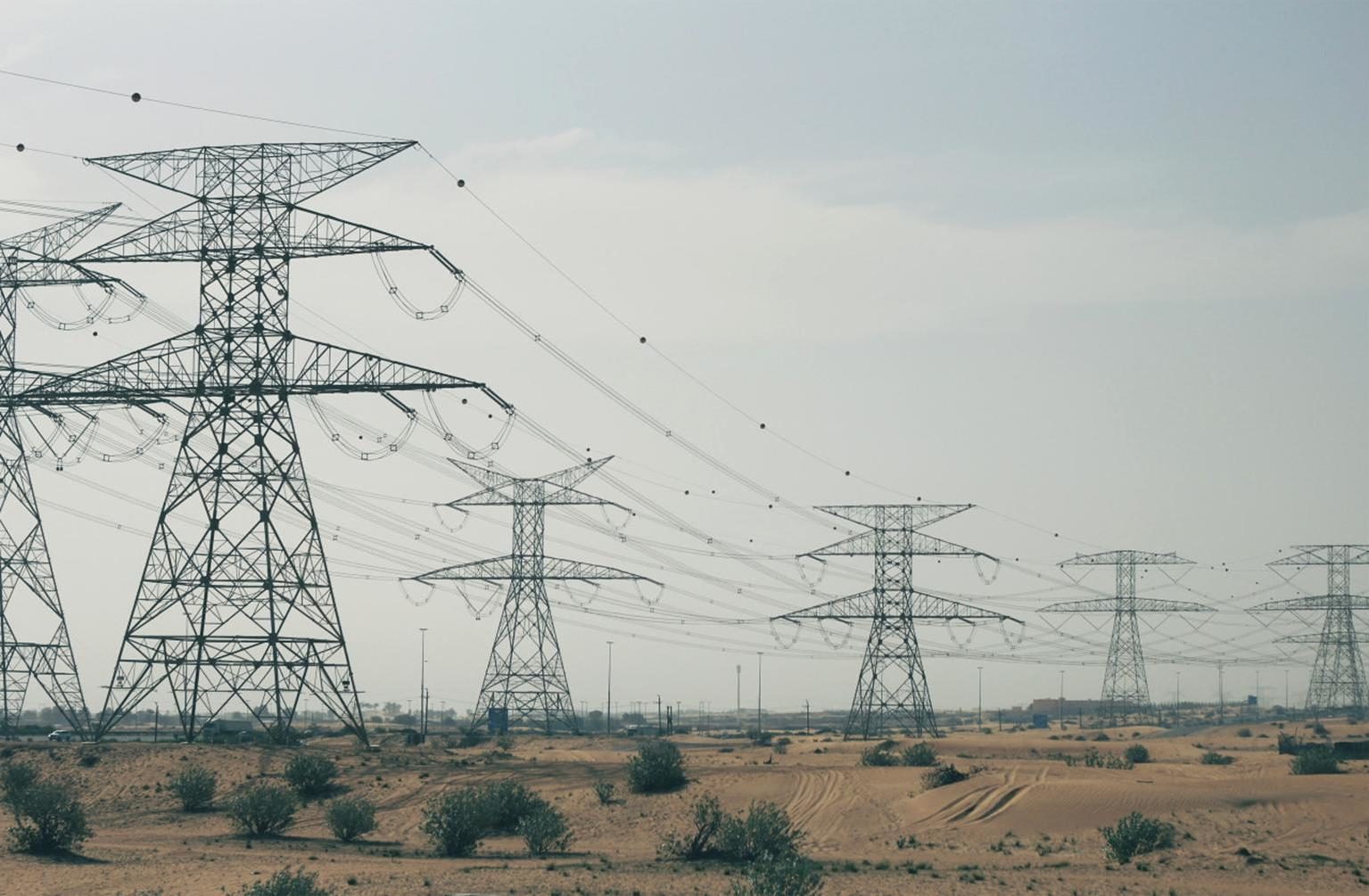
Today and the next forty years, the biggest change we have seen since electrical energy began to be distributed and widely used in the late 19th century will happen.
We no longer reflect on getting electrical energy out of the socket at home. Even less do we think about how it gets there. In this course, we take you from the world of the sun, wind, water and atoms to the electrical outlet. Electricity distribution has historically been one-way from a few hundred places out to millions of users.
Today, with renewable electricity production, we are turning that way around and getting hundreds of thousands of sources that will send their energy to all users.
This change does not happen by itself but is and will be dependent on people like you! With the course Electrical Power Systems you get insight into current and future infrastructure and can actively participate in building it for youself and your children.
The course deals with the structure of the system for distribution of electricity and the use of electricity for energy supply.
+change!
This semester is dedicated to the design approach meta-design, where the designer aims to be an active part in change-processes using designerly means. The semester is planned as a whole, where the different parts build on each other towards you carrying out a change-project as well as discussing, critically evaluating and contextualizing the design process from the perspective of sustainability.
To apply and practice the learning focuses of this course, you will work on one design project for the entire semester. The theme for this project will be Surplus of Homes.
This course on advanced beam theory comprises loading of beams in axial and transversal directions, bending and torsion. Beam theories for bending according to Bernoulli-Euler and Timoshenko are covered as well as theories for torsion according to St Venant and Vlasov. The course also covers the basics of theory for analysis of instability in a beam. Stress states in for example thin walled beams with open cross sections, and in beams with cross sections that vary in axial direction are calculated and discussed.
Welcome to the course 4SA720, Social Work in Times of migration: Perspectives on Policies, Institutions and Practices, 15 credits, Spring 2019
On this course website you can find information and news about the course.
In the folder " Course Documents" you will find basic information on the course, such as the course syllabus, the study guide and the schedule.
Under Topic 1 you find information about Module 1: Perspectives on migration and citizenship in pluralistic societies, 7,5 credit. Here material from lectures in Module 1 will be published. Moreover, here you will find instructions regarding the assignments related to Module 1. Here you also find the forum activity "Submission Individual written assignment " wherein you later on are supposed to submit your theoretical essay/paper.
Under Section 2 you will later during the course find information about Module 2: Social work practices and institutions in the context of migration, 7,5 credit. Here material from lectures in Module 2 will be published and you will find instructions regarding the assignments related to Module 2. Here you also find the forum activity "Submission Individual written assignment " wherein you later on are supposed to submit your final paper with an analysis of material collected during a minor "field study".
Here on the course website you can also discuss and raise questions regarding the course content, in the "Questions about the course" and "Class discussion" forum activities. The "News forum" will be used by teachers and examiners to publish news and updates on course activities.
We look forward to meeting you at course start!
Best regards
Jesper Johansson, course coordinator
Barzoo Eliassi, examiner
Welcome to the course Applied Machine Learning (Tillämpad Maskininlärning) 4DV117.
This is mainly an online course where you watch pre-recorded lectures and deepen your knowledge by reading the course literature. The course includes three physical meetings: course introduction, workshop 1 and workshop 2. At the workshops we discuss the subject and work with practical problems, so you need to bring your laptop to them. You can find the schedule here: https://coursepress.lnu.se/kurs/applied-machine-learning/schedule/
Welcome to the course 4SA720, Social Work in Times of migration: Perspectives on Policies, Institutions and Practices, 15 credits, Spring 2019
On this course website you can find information and news about the course.
In the folder " Course Documents" you will find basic information on the course, such as the course syllabus, the study guide and the schedule.
Under Topic 1 you find information about Module 1: Perspectives on migration and citizenship in pluralistic societies, 7,5 credit. Here material from lectures in Module 1 will be published. Moreover, here you will find instructions regarding the assignments related to Module 1. Here you also find the forum activity "Submission Individual written assignment " wherein you later on are supposed to submit your theoretical essay/paper.
Under Section 2 you will later during the course find information about Module 2: Social work practices and institutions in the context of migration, 7,5 credit. Here material from lectures in Module 2 will be published and you will find instructions regarding the assignments related to Module 2. Here you also find the forum activity "Submission Individual written assignment " wherein you later on are supposed to submit your final paper with an analysis of material collected during a minor "field study".
Here on the course website you can also discuss and raise questions regarding the course content, in the "Questions about the course" and "Class discussion" forum activities. The "News forum" will be used by teachers and examiners to publish news and updates on course activities.
We look forward to meeting you at course start!
Best regards
Jesper Johansson, course coordinator
Barzoo Eliassi, examiner
Welcome to the course Collecting, analyzing, and moderating user-generated social media material!
Course introduction is May 3rd from 9.00-11.00.
On the course, you get different types of learning. The lectures give an overview of an area. You use them together with the prescribed course literature to answer specific questions in a self-correcting test (which does not give points). The lectures address overviews of course literature and essential conditions in openness, freedom of expression, journalistic ethical principles, and ethical research considerations.
You are assessed in three mandatory examinations:
1) In the group project work, assessed in an oral examination, you work with at least one person in collaboration for a journalistic production using different methods to collect, analyze, and moderate user-generated material from social media. Resources such as supervision and seminars are provided. The oral examination of the group project work will be made on May 24th at 9-12 according to the upcoming schedule.
2) At this oral examination, you also do an "opposition" of another group work.
3) The course ends with individual work, where you choose an exciting example of journalistic use of user-generated material that you want to delve into. The in-depth study takes place by doing some form of test of the method, tool, production, moderation, etc. The deadline for the written report describing your work is June 4th.
Pernilla Severson, course coordinator, Associate Professor in Media and Communication Studies, pernilla.severson@lnu.se, +46480497058 http://lnu.se/en/staff/pernilla.severson/